
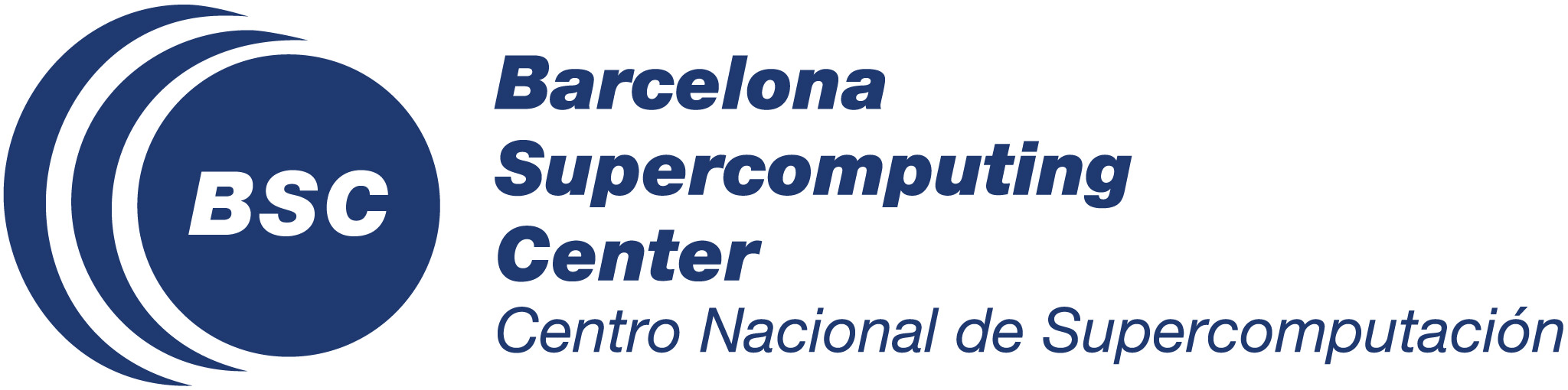
This month EPWS gives the floor to Dr. Simona Giardina, Life Sciences Scientific Coordination Officer for Data Management at the Barcelona Supercomputing Center (BSC) – Life Sciences Department – Coordination Unit
Dr. Simona Giardina holds a degree in Molecular Biology from the University of Pisa (Italy, 2012) and a PhD in Human Nutrition from the University Rovira i Virgili (Spain, 2018). Since 2018, she has been working at the Barcelona Supercomputing Center (BSC), where she manages international projects in life sciences and coordinates the data protection and ethics strategy of the department.
She advocates for the ethical and equitable use of health data as a global public good and participates in European initiatives such as The Genomic Data Infrastructure (GDI), HealthData@EU Pilot (EHDS2 Pilot), and The Cancer Image Europe (EUCAIM). Since 2023, she has been part of Bioinfo4Women (B4W), promoting the sex and gender dimension in research and health, which became a Conditional Full Member of EPWS in 2026.
Affiliation: Barcelona Supercomputing Center (BSC) – Life Sciences Department – Coordination Unit
Website: https://www.bsc.es/es
Email: simona.giardina@bsc.es

EPWS: What made you want to go to science? How did you decide to choose your discipline and your particular field of research? Did you have an inspiring model (parent, relative, teacher, literature, etc.)?
I find it difficult to call myself a scientist, at least in the strict sense of the word. My trajectory has not followed the classic path typically associated with that title. That said, I am very much part of the scientific world, just from a different place. I am part of the infrastructure that makes research possible: specifically, data governance, ethics, compliance. It is a work that is often overlooked and not glamorous, but it is essential. It allows researchers to focus on discovery and thinking without getting lost in everything that surrounds it.
From a very early age, I felt an intense curiosity about how living things work: “why we get ill, how species evolve, what life is made of”. I used to spend hours with the encyclopaedia we had at home, going back again and again to the pages on DNA, cells, planets, etc. As a teenager, I already knew I wanted to study biology. A big part of that came from my aunt, who was a clinical biologist and ran her own clinical laboratory. I loved visiting and imagining myself in the white lab coat.
What makes me want to stay connected to science, even after getting my PhD and having left aside the postdoc path, is its intellectual honesty and the fact that it never stops evolving. There is always something new to learn, a boundary being pushed, a discovery that challenges what we thought we understood. And that progress matters because it does not stay in the laboratory and in academia. Science informs policy, shapes public health, and has the potential to drive meaningful changes for society.
EPWS: What do you work on? How important is your research topic for science development or society?
Since 2018 I have been working at the Barcelona Supercomputing Center (BSC), one of Europe’s leading research infrastructures and home to MareNostrum, one of the most powerful supercomputers in Europe. I am part of the Coordination Unit of the Life Sciences Department, and my day-to-day work is about making sure research can be done responsibly and sustainably. My role sits on the governance side of that research; the infrastructure that allows science to function from the inside out, within research teams and across institutions and borders.
What drives me is making sure science is done well. That the right ethical frameworks are in place, that data is handled responsibly, that research actually benefits society and not just the few. That means constantly asking not just whether something can be done, but whether it should be done, and how. Those are questions I find worth dedicating a career to.
EPWS: What is your greatest success as a researcher (and as a teacher if you teach), the one you are most proud of? Could you share the memory of a great personal satisfaction during your research career with us?
My greatest success didn’t come with a publication or a grant. It is a more personal one: the decision to step away from the traditional research path and build a career on the governance and management side of science, and the determination it took to stick with that decision.
When I finished my PhD in 2018, I knew that I did not want to pursue a postdoc. I made a choice that was not easy to explain, neither to those around me, nor to the institutions I was applying to. Many assumed it was a temporary solution while I looked for a grant or found my way back to a conventional research career. It took months to convince people that this was a real choice, not a backup plan. There were a lot of closed doors. But I kept going, and eventually the Barcelona Supercomputing Center BSC gave me the chance I needed.
Looking back, that moment, being trusted to grow professionally at the intersection of science and management, is what I am most proud of.
EPWS: In which country/countries have you been doing research?
I started in Italy, in Pisa, where I studied Molecular Biology and had my first real contact with the research world through the long internships that are part of the Italian university system. Those months in the laboratory were challenging and not always easy. But the people I met there were worth everything, and some of those friends are still in my life today.
I then moved to Spain for my PhD, and Barcelona has been home ever since. That is where I finished my doctoral studies, and where I now work in research management at the BSC.
In between, I spent some time in Boston doing a research stay, and that experience surprised me more than I expected. On my very first day, my supervisor said something I was not used to hearing: “feel free to organise yourself and your daily work, and we will discuss together the decisions you think are best.” Honestly, I was not used to that. Where I came from, that kind of freedom was not something young researchers were given. It was a small thing, but it changed the way I thought about research, about trust, and about how people work best. It stayed with me, and I think it shaped a lot of how I later approached my work as a research manager.
EPWS: What is your agenda for the coming months?
The coming months are quite full, and I am very excited about it.
I am planning to focus on ethics, and I am also considering a publication in that space, which would mark a new chapter for me.
I will also be conducting a 1-month research exchange at the University of Helsinki’s Department of Sociology, where I will work on social and ethical metrics for evaluating AI applications in health. The exchange is part of the AHEAD project (AI for Health: Evaluation of Applications & Datasets), a 4-year European research initiative funded by the Marie Skłodowska-Curie Actions (MSCA) and coordinated by the Life Sciences Department at the BSC.
However, one of the things I am most excited about is the formalisation of Bioinfo4Women (B4W), an initiative born within our department at the BSC that we are now working to turn into an association. The goal is to keep advocating for gender equity in research and to advance gender medicine, ensuring that sex, gender, and intersectionality are not afterthoughts but embedded from the very start.
And of course, I am leaving a little space in the agenda for a surprise or two and to get serious about learning the art of the trapeze.
EPWS: Did you meet any barriers (personal/social/structural) during your career as a scientific researcher? Did you benefit from mentoring?
Yes, I did meet barriers, and I think it is important to talk about them honestly.
One of the most persistent was the lack of relatable women role models. Beyond the big names we all know – the pioneers, the Nobel laureates – there were very few women I could look to and recognise something of my own daily reality. The small and not so small struggles, the doubts, the pressure of feeling that as a woman being good is never quite enough, you have to be exceptional. And that should not be normal. But for a long time, I did not have role models who said it out loud. Women who said openly, “this is unfair, this is hard, and it does not have to be this way.” That honesty combined with resilience is what I was missing. I am lucky that today those women are part of my daily life, especially my colleagues at Bioinfo4Women.
The other barrier was structural: the chronic instability of research careers. I believe it played a big role in my decision to change direction. At some point I just needed to feel settled, to have a place that felt like home. And on top of all of that, there was the constant effort to keep a work-life balance without constantly being on the edge of burnout. That is something many researchers go through quietly, and I was no exception.
What helped me most was not a formal mentor but the friends and colleagues I had around me at each stage, the people I turned to and leaned on when things got hard. I want to mention three in particular: Maria Jose Rementeria and Claudia Rosas, a physicist and a computer scientist respectively, both group leaders of the Social Link Analytics group in the Life Sciences Department at the BSC; and Alba Jené, a bioinformatician and head of the Scientific Coordination Unit of the same department. All three are also coordinators of B4W.They are the kind of women role models I had always been looking for: human, empathetic, honest, and genuinely present. People who listen, who support, and who make you feel that your voice matters. Finding that, even if later in my career than I would have liked, changed a lot for me. And it made me realise how much more of it we need in science.
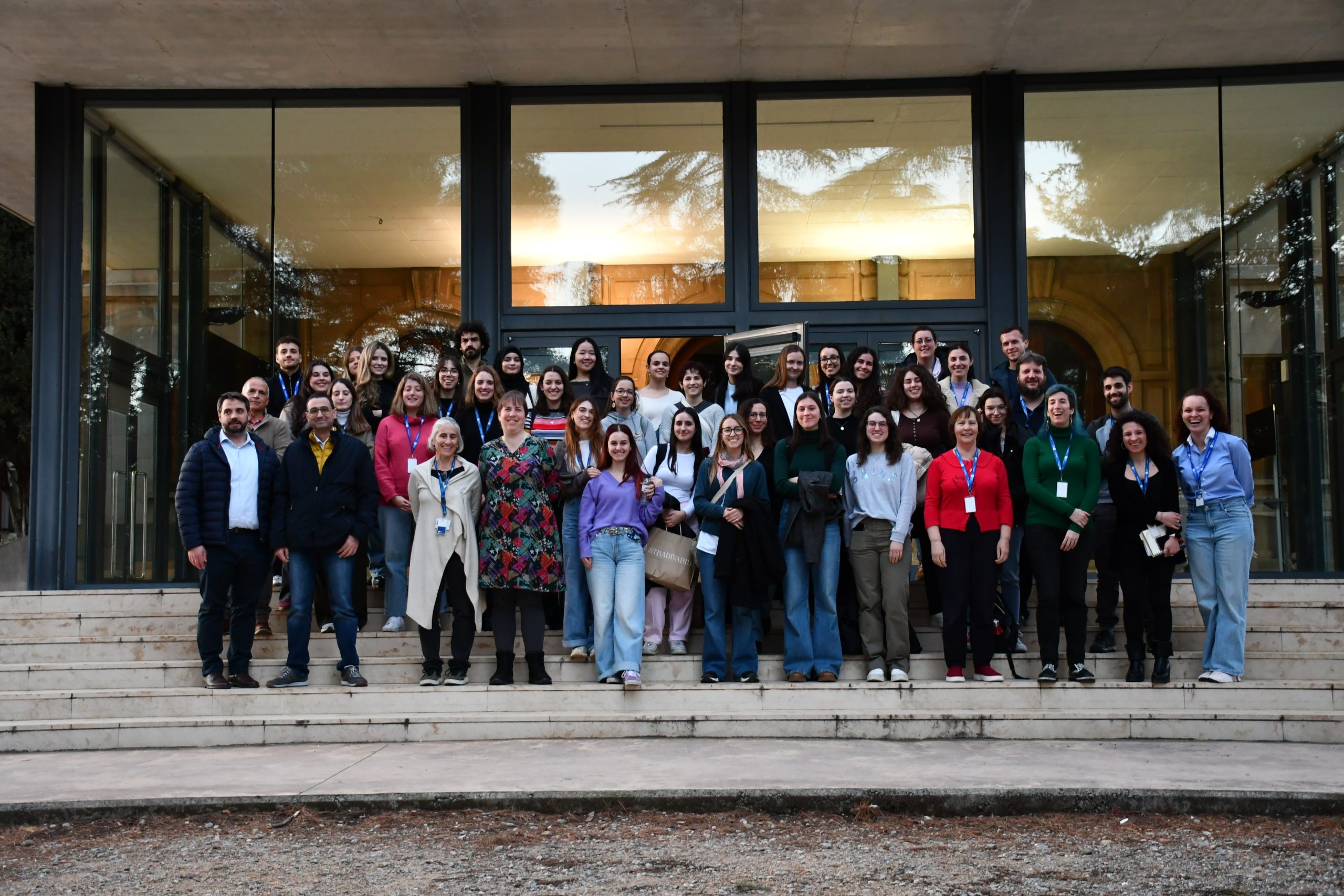
EPWS: What is the situation of gender equality in your working field? In the countries where you have been working, were there gender equalities policies and did you experience their effects?
In biology, health sciences, and research management, the numbers look encouraging at first glance. Women are well represented and, in many cases and hierarchy, they even outnumber men. But numbers alone can be misleading and do not always tell the real story. The leaky pipeline is still very much there. As you move up, the proportion of women drops sharply. Senior positions, group leadership, institutional decision-making, these are still mostly male spaces. Being present in science is not the same as having power or recognition within it.
There is another pattern that is worth talking about: women researchers tend to end up with a disproportionate share of administrative and organisational work: the invisible work that keeps groups and institutions running but does not show up on a CV or help anyone get promoted.
On the policy side, Spain has made real efforts. There is a genuine push at both governmental and institutional level, and some of it has made a real difference: more visibility, better support structures, clearer ways to report and address discrimination.
But even well-intentioned policies can backfire. Diversity and inclusion initiatives often end up leaning heavily on the very women they are supposed to support, asking them to join committees, run mentoring programmes, take part in outreach activities. So the women who care most about gender equity in science end up carrying the heaviest load, on top of everything else they already do. It is a real paradox, and one that Bioinfo4Women is actively trying to change.
EPWS: What do you suggest for a better implementation of gender equality in science?
Gender equality in science will not improve on its own. It requires change both inside research institutions and in the broader society around them.
Within research, the starting point is transparency. We cannot address gaps we do not measure, or that we measure poorly. Using clear language around sex, gender and other characteristics, building equality plans on solid data, and setting concrete actions with clear responsibilities and deadlines. These are basic steps that many institutions still get wrong. And just as important: the work of pushing for equality should not, once again, fall mainly on the shoulders of the women it is supposed to help.
But science cannot change if society does not change with it. And at the heart of that is the need to challenge traditional gender norms, the assumptions about who leads and who supports, who moves forward and who steps back, who does the visible work and who does the invisible work. These assumptions do not disappear when women enter the laboratory or the boardroom. They follow them in.
One of the clearest signs of those norms is the unequal share of unpaid care work. As long as women carry most of the weight of caring for children, elderly relatives, and households, their ability to progress in any profession will be limited. This is not a personal choice; it is the result of systems that were never built with equality in mind. Changing that means investing in publicly funded, accessible, good quality care services. It means real, equal, non-transferable parental leave. It means workplaces that recognise that care is everyone’s responsibility, not just women’s. But beyond care, it also means stronger public policies across the board, in housing, health, education, and social support, because gender equality cannot be built on a foundation of underfunded public services. And finally, none of this works without an intersectional approach. Gender does not exist separately from race, disability, socioeconomic background, or other parts of identity. Public policy, and equality plans within research institutions, need to take that complexity seriously if they want to build genuine inclusivity and coexistence, rather than just appear well-meaning.
EPWS: Did you experience networking between women scientists? Can you comment on your answer and explain why yes or not?
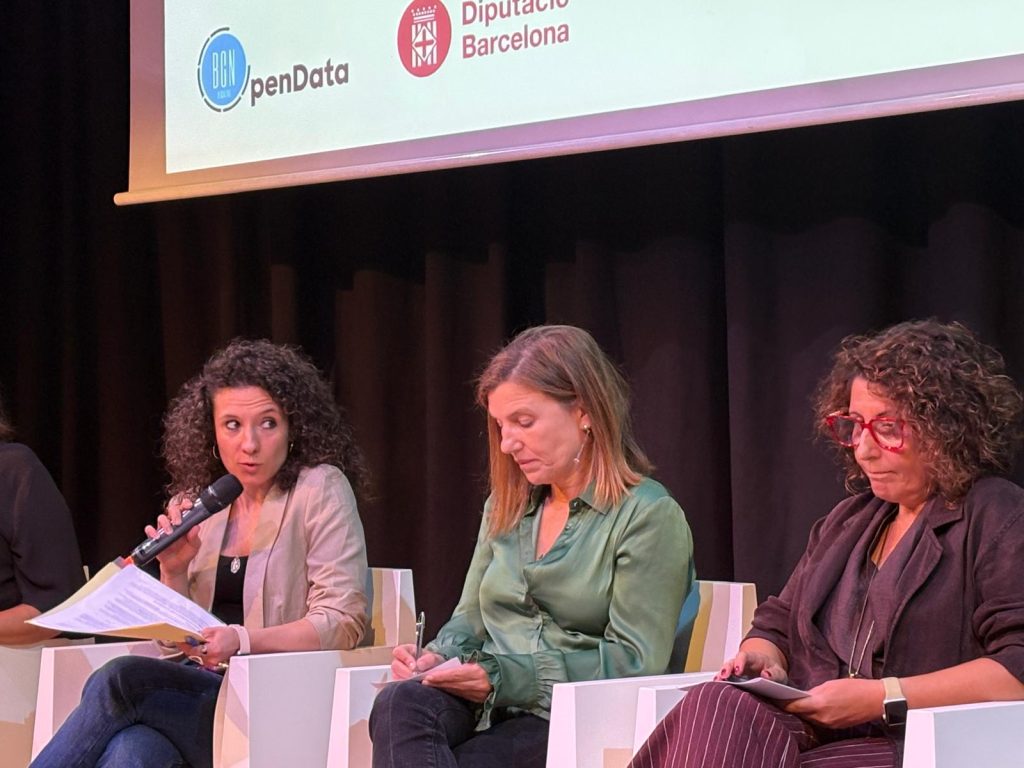
Yes, absolutely. I am an active member of Bioinfo4Women (B4W), an initiative that started within the Life Sciences Department of the BSC in 2018. I joined in 2023, and it has become something I care deeply about, both professionally and personally.
B4W was built around a clear vision: to promote gender equity in computational biology, to push for more women in scientific and technological leadership, and to build a scientific community that is more collaborative, supportive and fair. In practice, this means highlighting the work of women researchers in life sciences, providing role models, training and support at all stages of a career, with a particular focus on one of the hardest moments in research: the transition from postdoc to an independent position.
What B4W gives you, in the end, is a community. One that sees you, supports you, and reminds you that there is no single way to build a career in science. And that matters more than it might seem at first.
Because connecting with other women in science is not just about sharing contacts or opportunities. It is about building something more lasting, a shared understanding of what it means to do science as a woman, with all the complexity, resilience and creativity that comes with it.
EPWS: If you could start again your life, would you choose again to be a scientist? What would you change?
Yes, without a doubt. The curiosity, the people, the questions, the sense of being part of something that matters. I would choose all of it again. But if I could start over, there are a few things I would do differently.
The first is that I would explore fields beyond biology much earlier. Not to move away from science, but to bring more into it. One of the things I find most limiting about the way science is taught is how separated it still is from everything else. STEM and the humanities have always been treated as two different worlds, as if being curious about molecules and being curious about society, history or philosophy could not go together. But the big challenges we face today, the ethics of artificial intelligence, the governance of health data, the social side of disease, cannot be solved by science alone. They need history, philosophy, sociology, ethics. They need people who can move between different worlds. I wish someone had told me that earlier.
The second thing is more personal. I would have been quicker to say “no” when something was not right. Early in a career there is a tendency to swallow things quietly, to tell yourself that is just how it works, that speaking up might cost you more than staying silent.
EPWS: Could you leave a message to young European women scientists?
The message I would want to give early career women scientists is simple: there is no single way to be a scientist. The image of what a scientific career is supposed to look like was not built with all of us in mind. There are many ways to contribute, many ways to build something meaningful. Finding one’s own path is a strength.
Curiosity should not stop at the edge of one’s own research field. Learning about philosophy, sociology, ethics, art, engaging with the world outside the laboratory, is not a distraction. It makes you richer, and the questions that matter most rarely stay within one discipline.
Community matters enormously. Finding people who see you, who challenge you, who celebrate you without asking you to be less than you are. That kind of community carries you through the hard moments, the unfair ones, the ones where the system lets you down.
Working harder for the same recognition, carrying more invisible work, having to prove yourself in ways others simply are not asked to, these are real experiences for women in science. When that happens, it is worth naming it out loud. Saying no when something is not right is not something to apologise for, but it is something to claim.
Taking care of yourself matters too. A career built on the edge of burnout is not sustainable. Wellbeing is not a luxury. Rest is part of the work.