
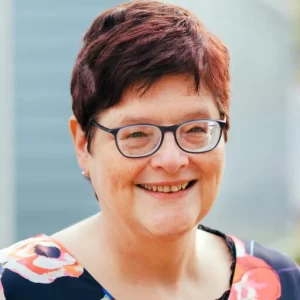
This month EPWS gives the floor to Prof. Bettina Pfleiderer, Associate Professor at the medical faculty of the University of Münster in Germany.
Prof. Dr. Pfleiderer is a German professor at the Medical Faculty of the University of Münster (Germany); she has a background in chemistry and medicine, as well as extensive international experience in leadership. She served as President of the Medical Women’s International Association (MWIA) from 2016 to 2019 and as Vice President of the European Women’s Lobby (EWL) from 2021 to 2023. Since 2022, she has been a member of the W20 EU Delegation to the G20 and currently is Head of the EU delegation.
She studied chemistry at Johannes Gutenberg University Mainz, earning her diploma in 1987, and a doctorate in chemistry from Eberhard Karls University of Tübingen in 1989. From 1990 to 1995, she conducted research at the Magnetic Resonance Imaging Centre of Massachusetts General Hospital within Harvard Medical School (USA). She then studied medicine at the University of Münster, obtaining her medical license in 2004 and a doctorate in medicine in 2005.
She leads the ‘Cognition & Gender’ research group at the Clinic of Radiology in Münster. Her research focuses on sex- and gender-sensitive medicine, brain imaging using functional Magnetic Resonance imaging (MRI), and domestic violence, including early work on silicone implant degradation and detection in the human body.
Affiliation:
Medical Faculty of the University of Münster, Research group Cognition & Gender
email: pfleide@uni-muenster.de
EPWS: What made you want to go to science? How did you decide to choose your discipline and your particular field of research? Did you have an inspiring model (parent, relative, teacher, literature, etc.)?
Since early childhood, I have been driven by a strong desire to understand how things work in detail. My father recalls that even at the age of three, I would constantly ask questions about everyday phenomena, such as how a light switch turns on a lamp. When I was nine, he gave me a children’s chemistry set, followed later by a more advanced version. I spent many hours conducting experiments in our basement, keeping a lab journal, and creating “table fireworks” — once even burning a hole in our wooden table. From an early age, I knew I wanted to become a chemist.
I am grateful to my father for encouraging my curiosity, especially at a time when girls in rural Germany were often expected to follow more traditional roles. A key role model for me was my aunt, a family physician with a large private practice in our village.
During my university studies, I realised that I was less interested in chemical synthesis and more drawn to analytical and physical chemistry, particularly modelling interactions between compounds. This led me to research at the interface of these fields. During my postdoctoral work in Boston, I investigated the degradation of silicone from breast implants using magnetic resonance imaging (MRI) and magnetic resonance spectroscopy (MRS), developing methods to detect and quantify silicone in the human body.
When questions arose about what happens to silicone in the liver, I realised that neither I nor the field had clear answers. This motivated me to study medicine. Through this path, I discovered my passion for working with patients and developed a deep interest in the brain. My research into silicone metabolism ultimately evolved into a broader focus on sex- and gender-sensitive medicine and brain function.
EPWS: What do you work on? How important is your research topic for science development or society?
My research currently focuses on three main areas:
- the study of brain function – such as the processing of pain, memory and mood disorders, itch, and the influence of sex, gender, and stereotypes – using MRI-based methods;
- sex- and gender-sensitive medicine; and
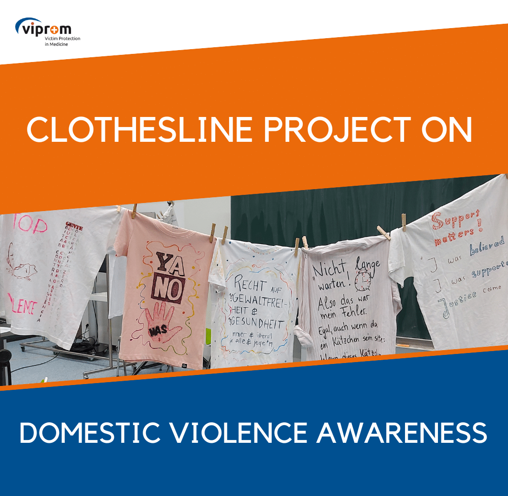
- domestic violence (DV). I have recently contributed as partner to three EU-funded projects on domestic violence: IMPRODOVA, IMPROVE and VIPROM, the latter of which I coordinated.
These research areas are highly relevant for both science and society. Understanding sex- and gender-related differences in medicine is essential for providing effective treatment for all patients and for reducing adverse drug effects. At the same time, addressing domestic violence is of critical societal importance. Together with my team, I have developed a training curriculum for domestic violence trainers, as well as an online platform providing tools for effective training in 12 languages.
EPWS: What is your greatest success as a researcher (and as a teacher if you teach), the one you are most proud of? ? Could you share the memory of a great personal satisfaction during your research career with us?
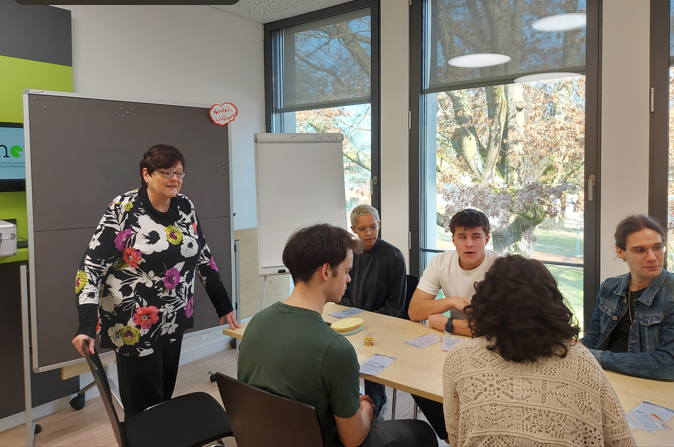
I have been fortunate to achieve several successes, so it is not easy to single out one. However, my most meaningful achievement has been contributing to the structural integration of domestic violence as a mandatory topic in the medical curriculum at my faculty in Münster, using tools developed by my team and myself. Closely related to this, I am particularly proud that the German train-the-trainer programme we developed has now been nationally accredited. This enables sustainable, high-quality training of educators on this important topic. Both developments give me a deep sense of satisfaction, as they ensure that our work has a lasting impact beyond individual research outputs and contributes directly to education and societal awareness.
EPWS: In which country/countries have you been doing research?
My research has taken me to Germany and the United States, and through EU-funded projects I have also collaborated with partners in Scotland, Italy, Sweden, Greece, Austria, Finland, Spain, France, Hungary and Portugal.
EPWS: What is your agenda for the coming months?
My agenda for the coming months includes:
- finalising several papers currently in progress;
- writing a policy paper on domestic violence;
- preparing a new EU proposal;
- serving as editor for a research topic on domestic violence;
- continuing to teach with passion; and
- contributing further to my role as Head of the W20 EU Delegation and Co-Chair of the W20 Working Group “Advancing Women’s Health”, with the aim of making a meaningful impact in this international policy arena.
EPWS: Did you meet any barriers (personal/social/structural) during your career as a scientific researcher? Did you benefit from mentoring?
When I was young and pursuing a career in science, there were many hurdles and challenges. You had to be persistent and courageous not to give up. As a mother of two young daughters, there were no adequate support structures – women were still largely expected to stay at home, and mentoring programmes were virtually non-existent. You often had to be twice as good to gain the same recognition and secure a permanent position (so I had no choice but to win research awards 😊). While this was demanding, it also strengthened my determination to continue.
EPWS: What is the situation of gender equality in your working field? In the countries where you have been working, were there gender equalities policies and did you experience their effects?
In Germany, we have not yet achieved gender equality in medicine; there is still a long way to go. Although around 80% of medical students are female, leadership positions continue to be predominantly held by men.
During my time in the United States, I had a different experience. I never felt that being a woman was a major issue. What mattered was whether you were capable of conducting excellent research and contributing strong ideas – not your gender.
EPWS: What do you suggest for a better implementation of gender equality in science?
Achieving gender equality in science requires both bottom-up and top-down approaches. This includes mentoring leaders – particularly men – on gender equality, increasing the visibility of women by giving them a stronger public voice, and establishing mentoring programmes in schools and universities. At the same time, it is important to encourage women to pursue leadership roles. I have seen too many highly capable women hesitate because they feel they are not qualified enough – even when they clearly are. Strengthening confidence and creating supportive structures are essential for lasting progress.
EPWS: Did you experience networking between women scientists? Can you comment your answer and explain why yes or not?
When I was younger, I was not aware of networks for women scientists, and I rarely met other female scientists at conferences. This has changed significantly. Today, such networks are a valuable source of support and offer important opportunities for exchange and collaboration. I am now actively mentoring young female physicians and researchers.
EPWS: If you could start again your life, would you choose again to be a scientist? What would you change?
Yes, absolutely. I would always choose to be a scientist – I love it. I would not change anything.
EPWS: Could you leave a message to young European women scientists?
Follow your dreams and your passion. Be persistent, and do not let anyone tell you that your work is not valuable or that you are not good enough. Think globally, collaborate with others, and look beyond national perspectives. Strong networks and teamwork are key to long-term success.
Favourite Links
https://training.improdova.eu/en/training-modules-for-the-health-sector/
https://genderedinnovations.stanford.edu/
https://amwa-doc.org/our-work/improving-healthcare/sex-and-gender-health-collaborative/sgsh-website/