
In this section, EPWS interviews European “Institutional Promoters” concerned with gender equality goals. In this series of interviews, we wish to highlight selected noteworthy institutional efforts to propose, adopt and implement equality and diversity initiatives for gender equality in research and the gender dimension in science context. On the EPWS website, portraits of institutional promoters alternate with those of distinguished women scientists and research policy-makers.
This month EPWS gives the floor to Lidwien Poorthuis, Managing Director and senior policy Advisor at the Dutch Network of Women Professors (LNVH)

Drs. Lidwien Poorthuis (1982) is managing director of the Dutch Network of Women Professors (LNVH). She holds degrees in French Language and Culture (in Business and Organisation) from Utrecht University and has been working in higher education and research for over 15 years. Since October 2013, she heads the bureau of the LNVH where she is responsible for policy making and policy development, and the initiation and support of gender equality related projects and activities.
She is the author of the annual ‘Women Professors Monitor’. Her focus lies in advocating for proportional representation, improving the position of all women in academia – regardless of their background – and achieving a safe and inclusive academic work environment where equal pay is the norm.
For more information, the Women Professors Monitor, our research reports and much more, visit the LNVH website: www.lnvh.nl.
As Managing Director and senior policy Advisor at the LNVH, would you please explain what is LNVH and what is its mission?
The Dutch Network of Women Professors (Landelijk Netwerk Vrouwelijke Hoogleraren, LNVH) is an autonomous foundation that began informally in the 1990s and was formally established on 9 August 2001. There were only 6% women professors in the Netherlands at that time. From its origins as a volunteer-led network, LNVH has professionalized into a national organisation that combines the strengths of an active membership base with sustained, evidence-based policy work. Our membership (we have affiliates, not members, to be precise) is substantial and representative: LNVH brings together well over 1,800 women full and associate professors from across all disciplines, and all Dutch universities and university medical centres. This broad constituency is both our mandate and our resource: members supply the lived experience, academic expertise and peer networks that underpin our advocacy, mentoring and knowledge-sharing activities.
At its heart LNVH’s mission is threefold and mutually reinforcing. First, we strive to promote and sustain a proportionate representation of women in the academy – at all scientific and leadership levels alike. Second, we work to improve the position and prospects of women of all backgrounds across the entire academic career pipeline. Third, we press for an inclusive, psychologically safe and fairly rewarded academic culture in which equal pay is the norm. These aims guide everything we do – from public monitoring to targeted capacity-building.
How we pursue that mission is intentionally plural. LNVH functions as: (a) a network that connects and mobilises senior women academics for mentoring, nominations and peer-support; (b) a knowledge centre that commissions and publishes rigorous, policy-relevant research (for example our annual Women Professors Monitor and thematic research reports); and (c) an advocacy and lobbying actor that engages university leadership, Ministry officials and sector bodies to shape policy and institutional practice. In recent years we have combined monitoring and research with practical tools – for example the SAFIA-toolkit for social safety and conversation cards on psychological safety – so that evidence translates into institutional change.
We position ourselves as a critical ally and agenda-setter: not content with reported inequalities, we push for measurable targets -at the request of LNVH, new targets are set by all Dutch universities for women professors for 2030-, transparent recruitment and promotion practices, leadership development, and institutional accountability. In short, LNVH aims both to illuminate where the academy falls short and to be a driving force for the structural changes needed to make academic careers equitable, inclusive and sustainable for everyone.
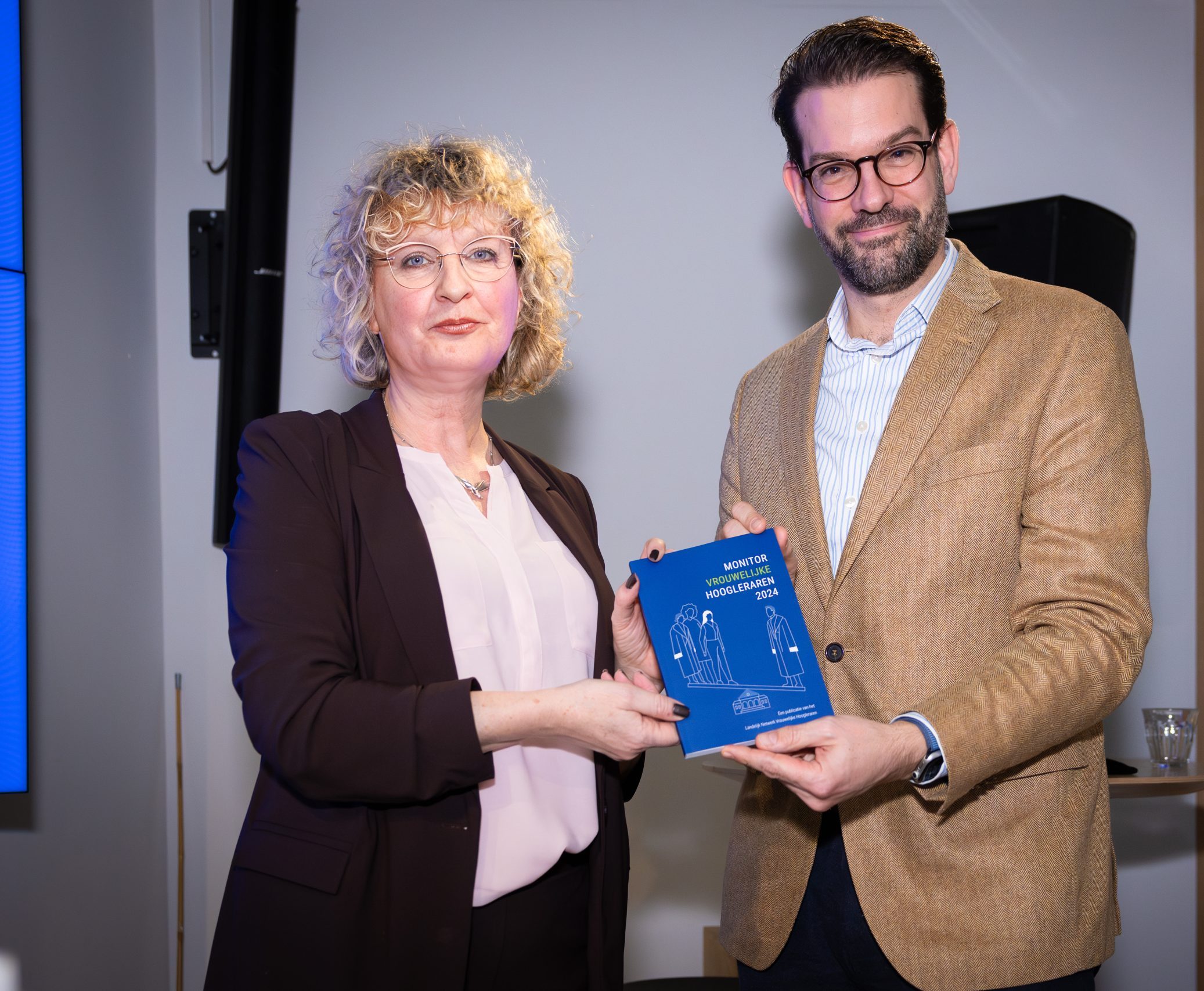
Photo by Melanie Lemahieu.
Please let us to know what role LNVH plays in shaping the global gender equality policy in science in general and in particular in academia. Please give a brief overview of the most important equality policy decisions and practices in research that have already been implemented, and which ones you consider important to implement in the future.
As LNVH we operate at the intersection of evidence, advocacy and practice. Our annual Monitor and our year-on-year reporting make clear that progress is real but uneven: the share of women full professors in Dutch universities has risen steadily (to 29.9% in the most recent Monitor), yet at current rates parity will not be achieved for decades (in 2043 based on the forecast in our Monitor) unless policy and institutional practice change more ambitiously. This empirical backbone shapes everything we do: rigorous monitoring, targeted capacity building (mentoring, leadership training and nomination support), and sustained policy engagement with universities, funders and government.
At the European level there has been an important shift from voluntary good practice to structural obligation. Horizon Europe now conditions eligibility for many calls on the presence of a Gender Equality Plan (GEP), and the Commission has integrated gender equality as a cross-cutting priority in research and innovation. These supranational moves create a lever that national networks like LNVH can use to push for concrete institutional reforms – transparent recruitment and promotion procedures, mandatory GEPs, integrated action on harassment and measures that mainstream gender into research content.
LNVH’s role is therefore threefold. First, we supply the data and diagnosis through our Monitor and thematic reports so that policy debates rest on evidence – see also our latest report Managing Academia: Access, Professional Appreciation, and Institutional Influence in Dutch Academic Management Roles (LNVH, 2025). Second, we translate evidence into practice: toolkits (for example SAFIA and resources on psychological safety), leadership and nomination pipelines, and targeted interventions aimed at improving retention and promotion. Third, we convene and pressure: we bring university leadership, funders and ministries into dialogue and hold them to measurable commitments. In short, LNVH acts as a critical ally, knowledge centre and agenda-setter.
Which equality measures have already been implemented at scale -and which should come next? On the “already” side: mandatory GEPs for Horizon Europe applicants; improved transparency of gender data; institutional adoption of codes of conduct and zero-tolerance frameworks for harassment; and a proliferation of leadership and mentoring programmes. These are necessary; they matter. Yet they are not sufficient. The next priorities must be structural and intersectional: embed intersectional analysis into GEPs and monitoring; require measurable outcomes (not only plans); redesign promotion and evaluation criteria to value a wider range of academic contributions; invest in prevention and robust response systems for harassment; and ensure family-friendly careers and equitable workload allocation. The EU’s recent work on zero-tolerance and on mainstreaming gender into R&I content provides models and tools we can adopt nationally.
Finally: who are the women now rising to the top? Broadly speaking, the women who advance most successfully are those who benefit from cumulative advantages -strong institutional support, mentoring and sponsorship, visibility in research networks, and positions within disciplines or units that are already moving toward parity. Crucially, aggregated numbers conceal persistent intersectional gaps: women from racialised, migrant, disability or other marginalised backgrounds remain significantly under-represented at senior levels and are more exposed to precarious working conditions and harassment. Addressing those layered disadvantages must be central to any credible plan for equality.
In your opinion, which actions are needed to improve the gender equality and diversity in the field of research and innovation, in higher education and in academia in your country as well as in Europe? Which are the new challenges concerned with rapid changes in the society rising for ensuring gender equality, equity, diversity and inclusion in higher education? Can you give us your comment on the latest EU science policies guidelines to address the mentioned challenges?
Improving gender equality, equity, diversity and inclusion in research and higher education requires far more than well-intentioned statements. In the Netherlands, as in many European systems, these issues remain “shell topics”: widely acknowledged yet insufficiently embedded in the core structures that govern academic careers, resource allocation and institutional accountability. In times of budget cuts, political headwinds and decreasing institutional bandwidth, topics that are not structurally anchored are the first to be deprioritised. That is precisely why durable commitment, courage and genuine institutional will are essential. We need less performative signalling and far more substantive, measurable action.
Several priorities follow from this. First, gender equality and broader D&I must be integrated into the fundamentals of academic governance: transparent recruitment and promotion criteria, equitable workload allocation, robust monitoring systems, and leadership that is explicitly accountable for progress. Second, an intersectional lens is crucial. The data show that the women who advance tend to be those already positioned closest to existing centres of privilege. As I said before, women from racialised, migrant, disabled or otherwise marginalised backgrounds continue to face compounded barriers. Policies that do not account for these layered disadvantages risk reproducing inequality rather than correcting it.
Third, in a rapidly changing society and academic landscape, new challenges demand timely responses. Digitalisation, AI-driven research cultures, precarity among early-career scholars, and increased polarisation in public debate all have disproportionate impacts on minoritised groups. Ensuring safe, inclusive and respectful academic environments has therefore become both more
urgent and more complex. Institutions must invest in prevention, clear procedures, and psychological safety as a core condition for excellence.
Recent EU science policy guidelines move in the right direction. The requirement for Gender Equality Plans under Horizon Europe, the stronger emphasis on zero-tolerance frameworks for harassment, and the integration of gender and diversity considerations into research content all provide meaningful levers for change. Yet their impact depends on national and institutional follow-through. Plans must evolve into practice, and practice into measurable outcomes.
In short, progress will rely on structural embedding, political and institutional courage, and a willingness to confront the uncomfortable gaps that persist beneath aggregated improvements. Europe has developed the tools; now we must apply them with consistency, integrity and ambition.
What impact LNVH’s activities, in terms of gender equity, diversity and inclusion, may have on higher education and academia policies and improvement of existing working culture as well as working conditions and careers?
.: LNVH influences Dutch higher education and academia by acting as a catalyst: we identify where progress stalls, bring the right people together, and help translate awareness into practical change. Our role as agenda-setter and ‘watchdog’ means that institutions know we are continuously observing trends, questioning complacency, and highlighting where ambition can -and must- be higher. This steady pressure keeps gender equity and inclusion visible, even when external circumstances make it tempting to scale back.
A distinctive part of our impact lies in building a national infrastructure for knowledge exchange. For example, we connect all HR and D&I policy advisers across universities and UMCs in our ‘LNVH HR platform’, and we convene our Associate Professor Sounding Board group, which brings together women Associate Professors from every institution. Through this forum, participants share their observations on the progress of gender equality, report both obstacles and positive developments, and collectively reflect on strategies for improvement. Mutual learning is central: evidence and experiences circulate quickly, enabling institutions to adopt effective practices without starting from scratch, creating a flywheel effect across the sector.
Beyond that, LNVH shapes working cultures by amplifying voices and perspectives that might otherwise remain unheard. We bring concerns from the academic community directly to leadership and policymakers, but we also highlight solutions, showcase promising practices, and help institutions reflect critically on their own systems.
In short: LNVH’s impact comes from combining vigilance with connection, and evidence with collaboration. We keep the topic alive, keep the system honest, and help create the conditions in which real cultural and structural change can take root.
Please let us know your opinion about the role of women scientists’ associations in the creation of gender equality policy. Which actions do you think are most suitable for ensuring a more effective collaboration between the women scientists’ associations and the science policy makers?
Women scientists’ associations play a crucial role in the creation of gender equality policy. At the heart of this role is the principle: “Nihil de nobis, sine nobis (Nothing about us without us).” It is essential that the voices of women scientists themselves are heard and that they actively participate in discussions about where and how change should take place. Networks of women scientists provide the critical bridge from anecdote to evidence: they help identify the underlying patterns, structural barriers, and factors that facilitate or hinder equality and psychological safety in academia. This insight is indispensable for developing policies that truly respond to the needs of the groups they are intended to support.
Too often, policy is made by individuals who lack the lived experience of those it affects, resulting in measures that are misaligned or ineffective. Women’s networks ensure that policy is not only informed by real-world experience but also practical, actionable, and adaptable. They can also play an important role in monitoring the effectiveness of policies, helping institutions understand what works, what does not, and where adjustments are needed. Gender equality is not static; the challenges and solutions evolve over time, and policy must remain up-to-date to be relevant.
For this reason, women scientists’ associations deserve a consistent and attentive hearing from leadership and a permanent seat at negotiation and policy tables. LNVH, for instance, is proud that over the past twenty years we have secured such a place, and are now recognised as a fully valued conversation and knowledge partner in shaping policies that advance equity, inclusion, and excellence in academia.
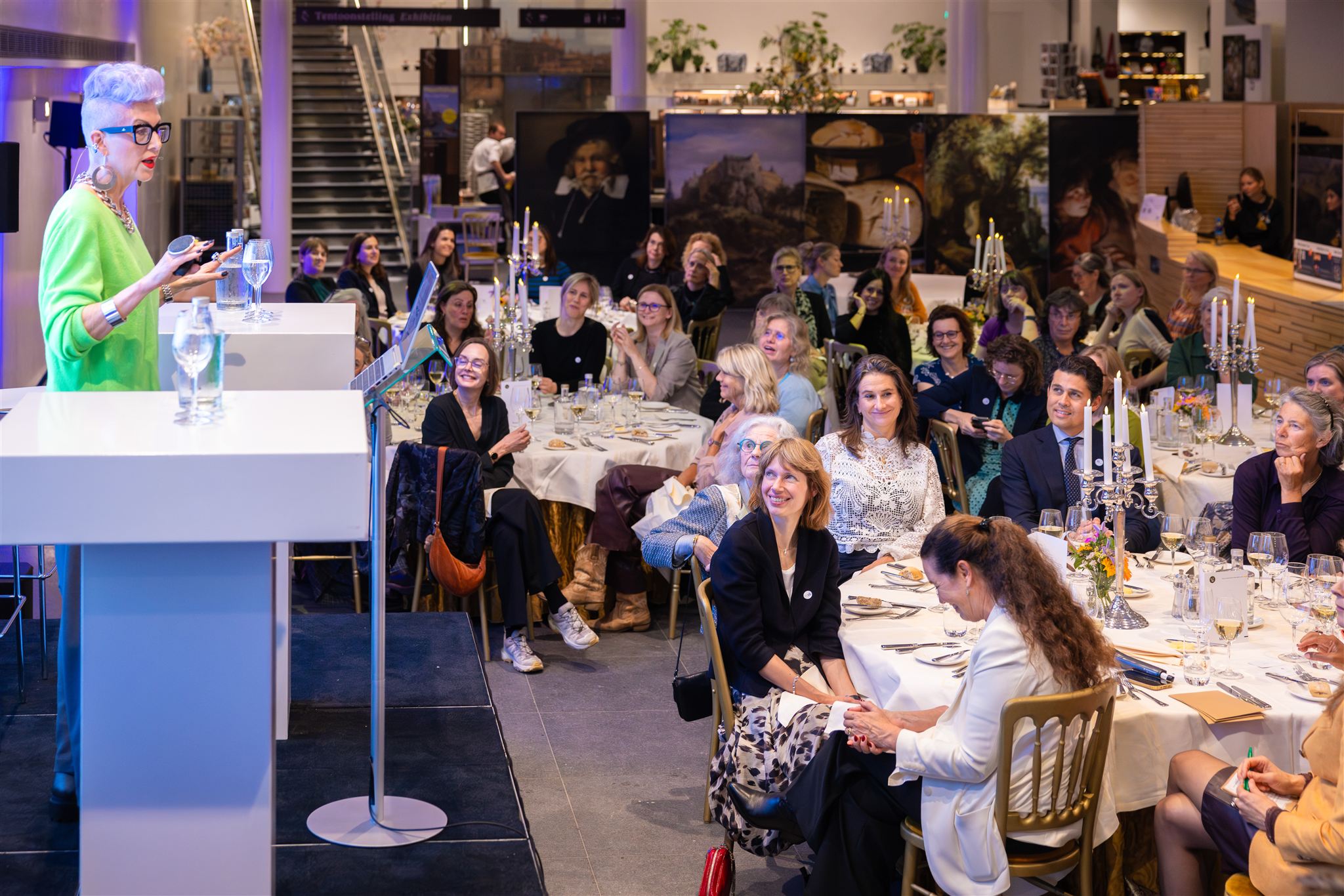
Photo by Melanie Lemahieu.
Favorite LINKS:
Dutch Network of Women Professors (LNVH) website: www.LNVH.nl (https://www.lnvh.nl/lnvh-reports / https://www.lnvh.nl/monitor)
Summary of the LNVH 2025 Monitor in English: https://www.lnvh.nl/a-4100/monitor-2025-landelijk-netwerk-vrouwelijke-hoogleraren-publicatie
She Figures index 2024: https://projects.research-and-innovation.ec.europa.eu/en/knowledge-publications-tools-and-data/interactive-reports/she-figures-2024#chapters
INSPIRE EU, 25 years of the European Research Area: https://inspirequality.eu/
The Podcast series:
Lost Women in Science: https://open.spotify.com/show/2TeYeCLqQbVyuyIQ6kYC7V
Redefining PINK: https://open.spotify.com/show/3wTKSD4HOE6vzMp81qj9KZ